
Common questions about our water, wastewater, and waste-to-energy solutions.

Frequently Asked Questions

Find answers to common questions about sewage treatment plants, effluent treatment systems, water treatment solutions, rainwater harvesting, biogas plants, and maintenance services. We help industries and communities implement reliable and sustainable environmental solutions.

What is rainwater harvesting?

Rainwater harvesting is the process of collecting rainwater from rooftops and surfaces and storing or directing it into recharge systems to replenish groundwater.

Why is rainwater harvesting important?

It helps reduce dependence on municipal water supply, prevents water scarcity, improves groundwater levels, and supports sustainable water management.

Where can rainwater harvesting systems be installed?

These systems can be installed in residential buildings, commercial complexes, industrial facilities, educational institutions, and large campuses.

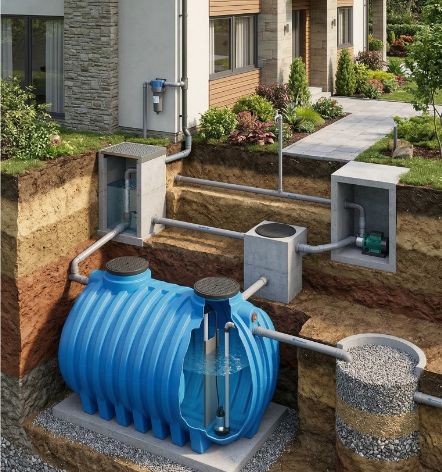
What components are included in a rainwater harvesting system?

A typical system includes rooftop collection areas, gutters, downpipes, filtration chambers, storage tanks, and recharge pits to safely store or recharge collected rainwater.

Does rainwater harvesting require regular maintenance?

Yes. Periodic cleaning of gutters, filters, and storage systems ensures efficient water collection and prevents contamination or blockages.

Can harvested rainwater be used for domestic purposes?

After proper filtration and treatment, rainwater can be used for gardening, washing, flushing, and other non-potable domestic applications.

What is an Effluent Treatment Plant (ETP)?

An Effluent Treatment Plant treats industrial wastewater containing chemicals, oils, heavy metals, and process contaminants generated during manufacturing operations.

Which industries require ETP systems?

Industries such as pharmaceuticals, chemicals, textiles, food processing, distilleries, dye manufacturing, and engineering units commonly require ETP systems.

What is a Zero Liquid Discharge (ZLD) system?

A ZLD system ensures that no liquid wastewater is discharged from the facility. The system recovers water for reuse while converting remaining waste into solid residues for safe disposal.

Why are ETP and ZLD systems important for industries?

These systems help industries comply with environmental regulations, reduce water consumption, recover valuable resources, and minimize environmental impact.

What parameters are monitored in industrial effluent treatment?

Key parameters include pH, BOD, COD, TDS, suspended solids, oil & grease, and heavy metals depending on the type of industry.

Can treated industrial wastewater be reused?

Yes. Treated water can often be reused in cooling towers, boiler feed systems, or other industrial processes to reduce freshwater consumption.

What challenges are common in effluent treatment systems?

Industrial effluent often varies in composition and flow rate, requiring properly designed treatment processes to maintain consistent treatment efficiency.

What is a Sewage Treatment Plant (STP)?

A Sewage Treatment Plant treats domestic wastewater generated from residential complexes, hotels, commercial buildings, hospitals, and institutions. The treatment process removes organic matter, suspended solids, and harmful microorganisms before the water is safely discharged or reused.

Where are STPs typically installed?

STPs are commonly installed in residential townships, apartment complexes, hotels, hospitals, office parks, and institutional campuses where large volumes of domestic sewage are generated.

Can treated sewage water be reused?

Yes. Treated water from an STP can be reused for landscaping, gardening, flushing systems, cooling towers, and other non-potable applications, helping reduce freshwater consumption.

What treatment technologies are commonly used in STPs?

Common technologies include MBBR, SBR, MBR, activated sludge processes, and tertiary filtration systems depending on the required treatment standards.

What factors determine the capacity of an STP?

The capacity depends on the number of users, daily water consumption, wastewater generation, and the discharge standards required by regulatory authorities.

Is an STP mandatory for residential or commercial projects?

Many local environmental authorities require STPs for large residential complexes, hotels, institutions, and commercial developments.

How much space is required for installing an STP?

Space requirements vary based on plant capacity and technology. Compact systems like MBBR and MBR allow installation in smaller footprints.

What is a Water Treatment Plant (WTP)?

A Water Treatment Plant removes impurities, suspended particles, bacteria, and dissolved contaminants from raw water sources such as borewells, rivers, or municipal supply to make the water suitable for drinking or industrial use.

Where are WTP systems used?

WTP systems are widely used in industries, residential townships, commercial buildings, hospitals, and municipal water supply systems.

What processes are involved in water treatment?

Typical processes include coagulation, sedimentation, filtration, softening, disinfection, and advanced purification depending on the water quality.

What types of water sources can be treated in a WTP?

WTP systems can treat water from borewells, rivers, lakes, reservoirs, and municipal supply networks.

How is water quality monitored in a treatment plant?

Water quality is monitored through laboratory testing and online sensors that measure parameters such as turbidity, pH, hardness, and microbial contamination.

Can WTP systems be customized for specific industries?

Yes. Water treatment processes are designed based on raw water characteristics and the specific quality requirements of the industry.

What is a biogas plant?

A biogas plant converts organic waste such as food waste, agricultural waste, and sewage sludge into biogas through anaerobic digestion.

How can biogas be used?

Biogas can be used for cooking, heating, electricity generation, or as a renewable energy source in industrial and commercial applications.

What are the benefits of waste-to-energy systems?

These systems reduce organic waste disposal problems, generate renewable energy, lower carbon emissions, and support sustainable waste management.

What types of waste can be used in a biogas plant?

Biogas plants can process organic waste such as food waste, agricultural residues, animal manure, and sewage sludge.

What by-products are generated from biogas plants?

In addition to biogas, the process produces nutrient-rich digestate that can be used as organic fertilizer.

Are biogas systems suitable for commercial facilities?

Yes. Hotels, food processing units, large kitchens, and agricultural operations can benefit from biogas plants for waste management and energy generation.

What is augmentation of an existing treatment plant?

Augmentation involves upgrading the capacity or performance of an existing treatment plant to handle increased wastewater loads or stricter discharge standards.

What does retrofitting mean in water treatment systems?

Retrofitting involves modifying or improving existing treatment systems by integrating new technologies, replacing outdated equipment, or optimizing plant performance.

Why is retrofitting beneficial?

Retrofitting helps improve treatment efficiency, reduce operational costs, and extend the life of existing infrastructure without building a completely new plant.

When should an existing treatment plant be upgraded?

Upgrades are usually required when wastewater volumes increase, plant efficiency declines, or new regulatory standards need to be met.

Can modern technologies be integrated into older treatment plants?

Yes. Existing systems can be upgraded with improved aeration systems, filtration units, automation controls, and energy-efficient equipment.

Does retrofitting reduce operational costs?

Improved process efficiency and optimized equipment often result in lower energy consumption and reduced operational expenses.

What are AMC services for treatment plants?

AMC (Annual Maintenance Contract) services involve regular inspection, preventive maintenance, troubleshooting, and operational support for water and wastewater treatment plants.

What is included in ERA’s AMC services?

Services typically include routine maintenance, system monitoring, equipment servicing, performance optimization, and compliance support.

Why is regular maintenance important for treatment plants?

Proper maintenance ensures reliable plant operation, consistent treatment quality, longer equipment life, and reduced downtime.

How frequently are treatment plants inspected under AMC services?

Inspection schedules vary based on the agreement but typically include routine monthly or quarterly maintenance visits.

Do AMC services include emergency support?

Yes. Many AMC agreements include emergency troubleshooting and technical assistance in case of equipment or process failures.

Can AMC services improve plant performance?

Regular monitoring, preventive maintenance, and process optimization help maintain treatment efficiency and extend equipment life.
Need Help With Your Water

or Wastewater Project?

Planning a new treatment plant, upgrading an existing system, or looking for reliable operation and maintenance support? Our team is ready to help with practical and sustainable solutions.