
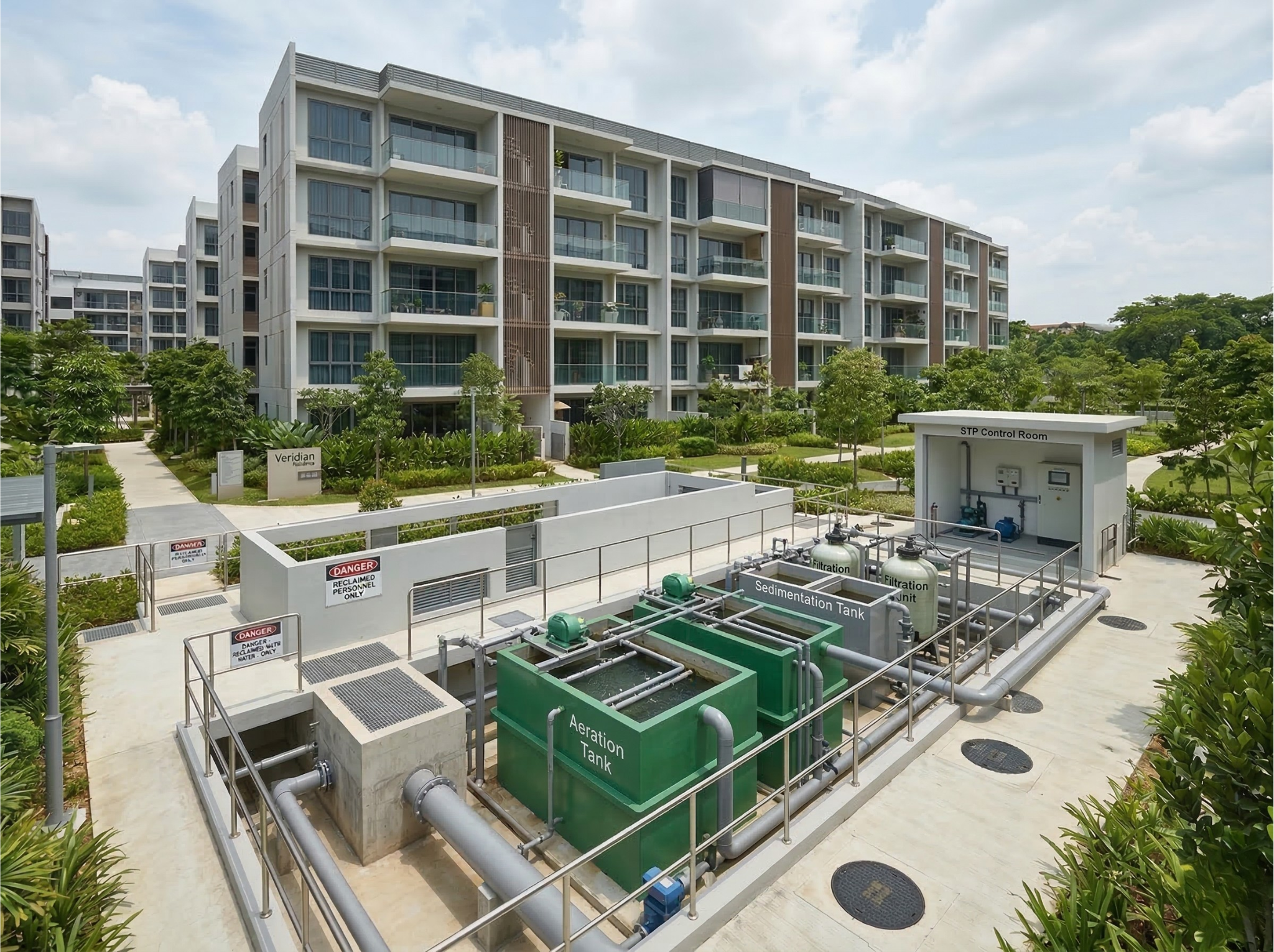
WHAT WE DO

Efficient STP Wastewater Treatment

We design advanced STP systems to treat domestic wastewater efficiently, reduce environmental impact, and enable water reuse for non-potable applications.
Sewage Collection Treatment

Wastewater from buildings is collected through drainage networks and directed to preliminary treatment units where large solids, grit, and debris are removed before further processing.

Biological Treatment Process

Advanced biological treatment methods break down organic contaminants and reduce pollutants, ensuring purification of wastewater through aeration and microbial processes.

Treated Water Reuse & Disposal

Treated water can be safely reused for landscaping, flushing, cooling systems, and other non-potable applications or discharged as per environmental regulations.

ABOUT SEWAGE TREATMENT

Reliable Wastewater Treatment Through Modern STP Systems

Sewage Treatment Plants (STPs) are essential for managing wastewater generated from residential, commercial, and industrial facilities. Proper treatment ensures that contaminants are removed before the water is reused or safely discharged into the environment.

Our STP solutions are designed using efficient treatment technologies to achieve high treatment performance while minimizing operational costs. By treating and recycling wastewater, organizations can conserve freshwater resources and comply with environmental standards.
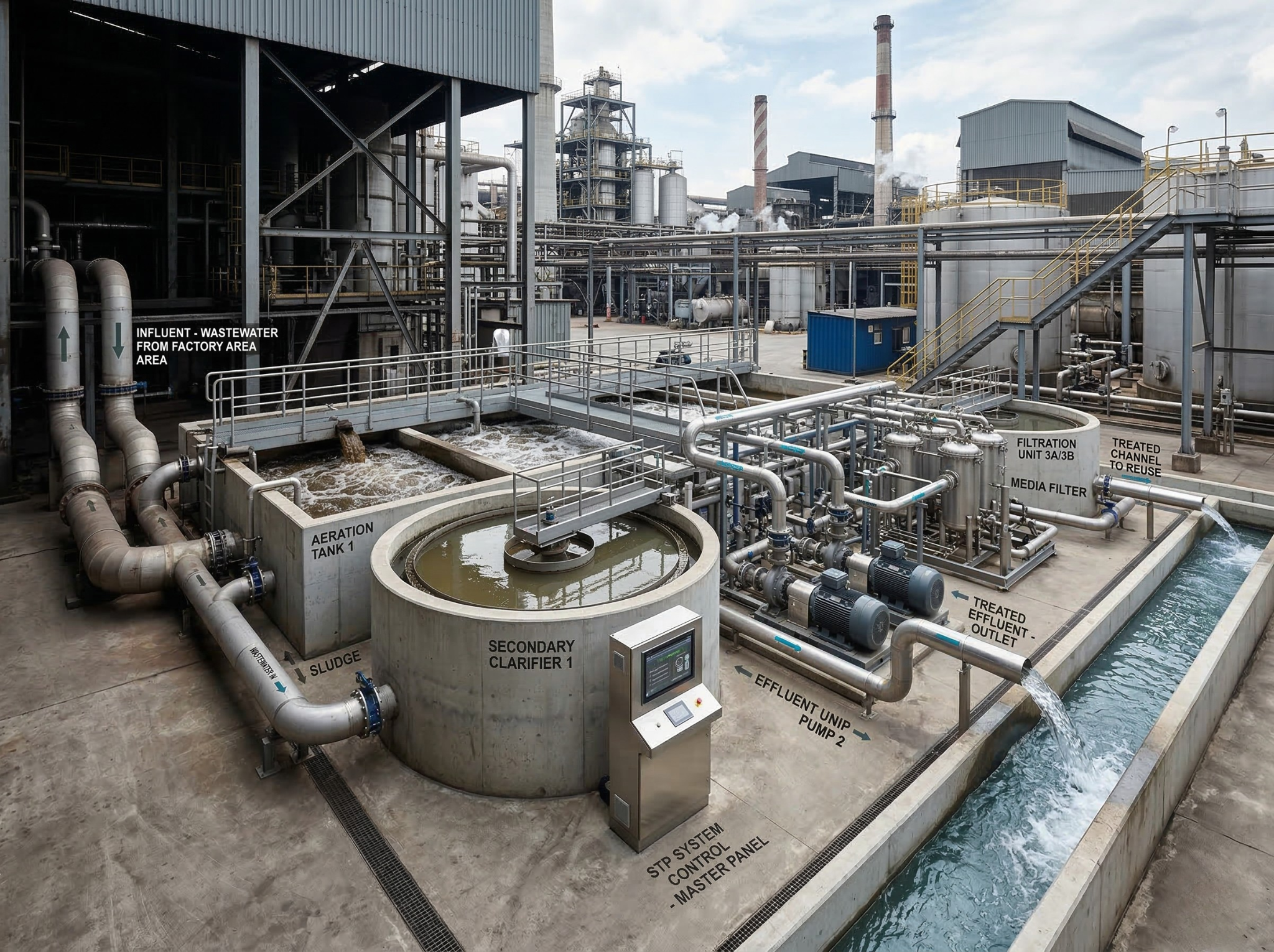
Efficient STP Solutions for Wastewater Treatment
Reliable Wastewater Treatment Through Modern STP Systems
WHY SEWAGE TREATMENT

Key Benefits of Sewage Treatment Plants

Sewage Treatment Plants provide environmental and operational benefits by treating wastewater effectively, reducing pollution, and enabling safe water reuse for sustainable water management.

Environmental Protection

STPs prevent untreated sewage entering water bodies, protecting ecosystems and maintaining environmental balance.

Water Reuse

Treated wastewater can be reused for landscaping, flushing, cooling towers, and other non-potable purposes.

Reduced Freshwater Demand

Recycling treated water reduces dependence on municipal water supply and groundwater extraction.

Pollution Control

Proper treatment significantly reduces harmful pollutants such as suspended solids, organic matter, and pathogens.

Cost Efficiency

Reusing treated wastewater lowers water procurement costs and supports long-term operational savings.

Regulatory Compliance

STP systems help organizations comply with pollution control regulations and environmental guidelines.

OUR APPROACH

Reliable Sewage Treatment Solutions for Modern Infrastructure

Our sewage treatment systems are engineered for residential complexes, commercial developments, industries, hospitals, and institutional campuses. From system design and installation to retrofitting and maintenance, we deliver solutions that ensure efficient wastewater treatment and sustainable water reuse.
  • Sewage collection and screening systems
  • Biological treatment processes (aeration and microbial treatment)
  • Sludge separation and clarification systems
  • Treated water storage and reuse integration
image

Sewage Treatment Plant (STP) FAQs

Common questions about sewage treatment systems, wastewater recycling, system components, and maintenance.
  • What is a Sewage Treatment Plant (STP)?

    A Sewage Treatment Plant (STP) is a system designed to treat domestic wastewater generated from residential, commercial, or institutional buildings. It removes contaminants, organic matter, and harmful microorganisms, making the treated water suitable for safe discharge or reuse.

  • Why are Sewage Treatment Plants important?

    STPs play a vital role in protecting the environment by preventing untreated sewage from contaminating water bodies and soil. They also enable wastewater recycling, helping conserve freshwater resources.

  • Where are Sewage Treatment Plants installed?

    STPs are commonly installed in residential complexes, commercial buildings, hotels, hospitals, educational institutions, industrial facilities, and municipal infrastructure where large volumes of sewage are generated.

  • What processes are involved in sewage treatment?

    Typical sewage treatment processes include preliminary screening, biological treatment through aeration, clarification to separate sludge, filtration, and disinfection before reuse or discharge.

  • Does a Sewage Treatment Plant require maintenance?

    Yes. Regular maintenance is essential to ensure efficient operation. This includes monitoring aeration systems, cleaning filters, sludge management, and periodic inspection of pumps and pipelines.

  • Can treated sewage water be reused?

    Yes. Treated water from STPs can be reused for landscaping, flushing, cooling towers, construction activities, and other non-potable applications depending on treatment quality and local regulations.