

WHAT WE DO

Rainwater Harvesting & Groundwater Recharge Solutions

We design rainwater harvesting systems that capture, filter, and recharge rainwater to improve groundwater levels and reduce water dependency.
Rooftop Rainwater Collection

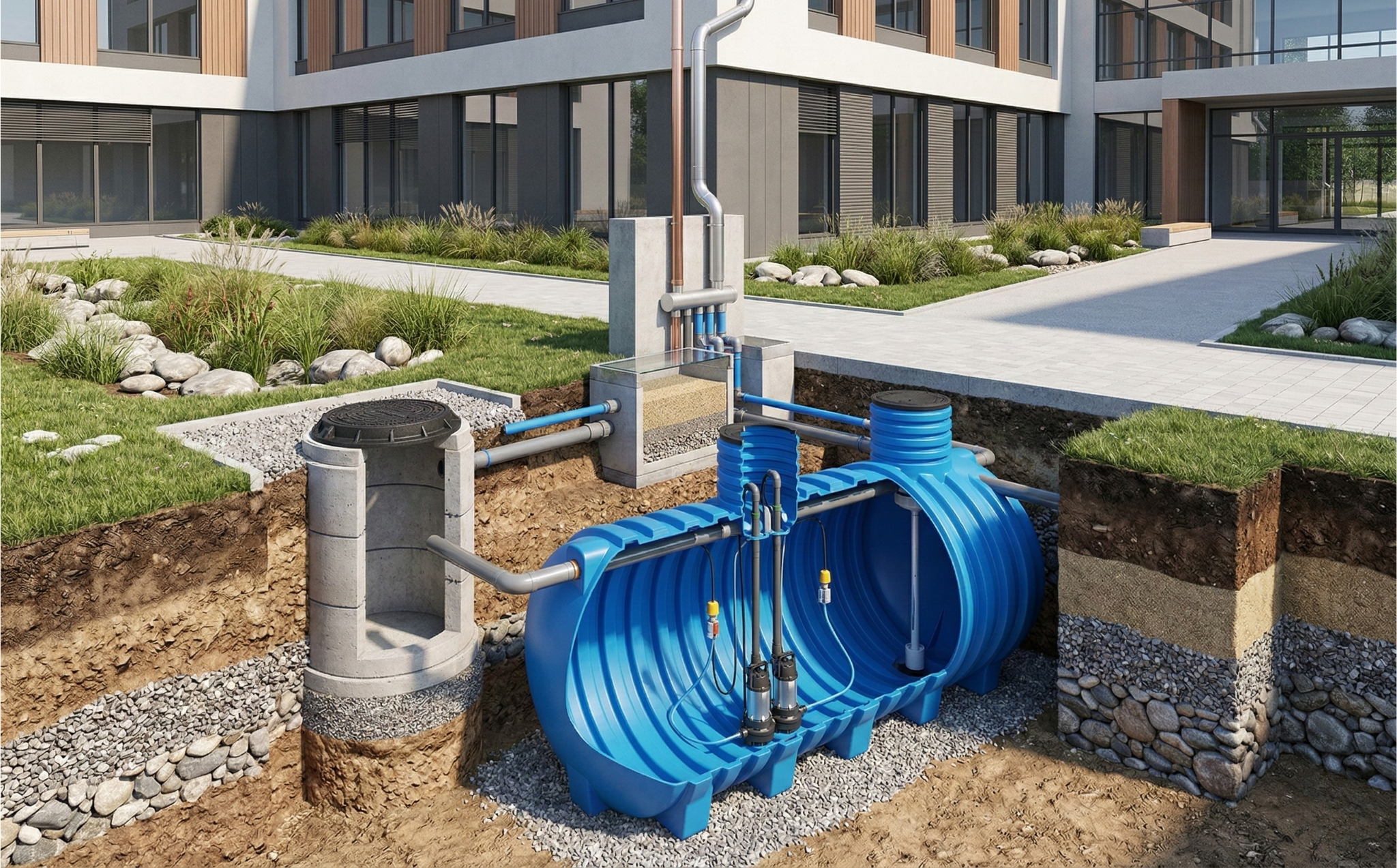
Rainwater collected from rooftops is channelized through gutters and downpipes into filtration units for storage or groundwater recharge.

Filtration & Recharge Systems

We design filtration chambers and recharge pits that remove impurities before safely directing rainwater into underground aquifers.

Storage & Utilization Systems

Harvested rainwater can be stored in tanks and reused for landscaping, flushing, and non-potable applications efficiently.

ABOUT RAINWATER HARVESTING

Smart Water Conservation Through Rainwater Harvesting

Rainwater harvesting is an effective way to conserve water by capturing rain from rooftops and surfaces before it is lost as runoff. Properly designed systems help recharge groundwater, reduce dependence on municipal supply, and support sustainable water management.

Our team designs customized harvesting systems based on site conditions, rainfall patterns, and water requirements to ensure efficient collection, filtration, and recharge.
Rain Water Harvesting
We’re full service which means we’ve got you covered on design and content right through to opportunities digital.
WHY RAINWATER HARVESTING

Key Benefits of Rainwater Harvesting Systems

Rainwater harvesting offers environmental and economic advantages by conserving water resources and reducing pressure on groundwater supplies.

Groundwater Recharge

Recharge pits and wells help replenish underground water levels and improve aquifer sustainability.

Reduced Water Dependency

Harvesting rainwater significantly reduces reliance on municipal supply and borewell water extraction.

Stormwater Management

Controlled collection systems effectively reduce surface runoff and minimize potential flooding risks.

Water Conservation

Captured rainwater provides an additional sustainable water source for various non-potable uses.

Cost Savings

Using harvested rainwater can significantly reduce water procurement and pumping energy costs.

Environmental Sustainability

Rainwater harvesting promotes responsible water usage and supports long-term environmental balance.

OUR APPROACH

Reliable Rainwater Harvesting Solutions for Modern Infrastructure

Our rainwater harvesting solutions are designed for residential buildings, commercial complexes, industries, and institutional campuses. From system design and installation to integration with existing water infrastructure, we ensure efficient rainwater capture and sustainable groundwater recharge.
  • Rooftop rainwater collection and conveyance systems
  • Recharge pits, percolation wells, and borewell recharge structures
  • Recharge pits, percolation wells, and borewell recharge structures
  • Underground storage tanks for rainwater collection and reuse
  • Stormwater management and groundwater recharge infrastructure
  • Integration with existing water supply and drainage systems
image

Rainwater Harvesting System FAQs

  • What is rainwater harvesting?

    Rainwater harvesting is the process of collecting and storing rainwater from rooftops or surface catchment areas and directing it to storage tanks or groundwater recharge structures. The harvested water can be used for non-potable applications or allowed to recharge aquifers, reducing dependence on municipal or groundwater sources.

  • Why is rainwater harvesting important?

    Rainwater harvesting helps conserve water resources by capturing rainfall that would otherwise be lost as runoff. It reduces pressure on groundwater extraction, lowers water procurement costs, mitigates urban flooding, and contributes to sustainable water management in residential, commercial, and industrial facilities.

  • Where can rainwater harvesting systems be installed?

    Rainwater harvesting systems can be installed in a wide range of facilities including residential buildings, commercial complexes, industrial plants, educational institutions, hospitals, and government buildings. They are especially beneficial in areas facing water scarcity or where groundwater recharge is required.

  • What components are included in a rainwater harvesting system?

    A typical rainwater harvesting system includes a roof catchment area, gutters and downpipes, filtration units, storage tanks or recharge pits, and a piping network for distribution or groundwater recharge. Additional components such as first-flush devices and pumps may also be included depending on system design.

  • Does rainwater harvesting require regular maintenance?

    Yes. Periodic maintenance is essential to ensure efficient system performance. This typically includes cleaning roof catchment areas, inspecting gutters and downpipes, maintaining filters, and checking storage tanks or recharge structures to prevent blockages or contamination.

  • Can harvested rainwater be used for domestic purposes?

    Harvested rainwater can be used for several non-potable domestic applications such as landscaping, toilet flushing, cleaning, and cooling systems. With proper filtration and treatment, it can also be used for additional purposes depending on local regulations and water quality requirements.